
 Posted by Cade on Oct 09, 2026
We're excited to introduce our regular newsletter. We'll shout out stories on local housing issues that we love, call out media missing critical context, share upcoming events, and get us all inspired by work happening elsewhere. As always, you can reach us at [email protected].
News we ♥️
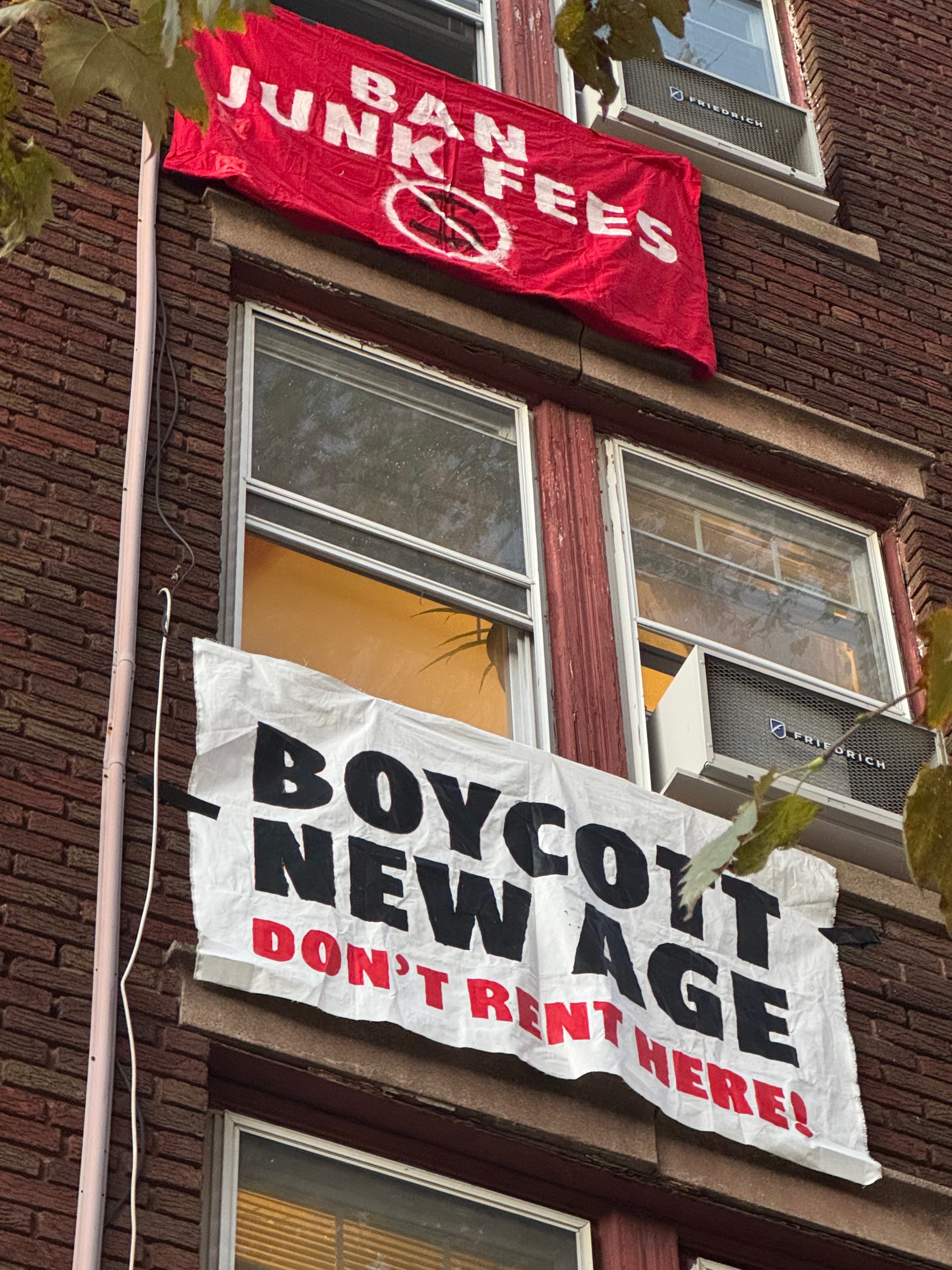
We love this coverage of the rise of tenant organizing in Philadelphia. New Age tenants are organizing with the Citywide Tenant Union of Philly DSA, Odin tenants have been organizing for many years with Renters United, and tenants in buildings across the city are uniting with their neighbors. “Tenants are really pushed against the wall and realizing that the only choice they have is to come together,” said Vincent Montoya, an organizer with Philadelphia DSA.
When tenants see media about other tenants organizing – and see that it works! – they’re inspired to do the same. We heard this a lot from Philadelphians who read about the organized tenants who ultimately saved Brith Sholom House. Philly is a union town, at work and at home.
Critical context missing ‼️
This WHYY headline frames new housing data from Cherelle Parker’s mayoral administration as unequivocally positive. Upon closer examination, though, the H.O.M.E. Dashboard raises questions that nobody seems to be asking.
Background on Mayor Parker’s Housing Goals and the H.O.M.E. Plan
The Parker administration’s stated goal is to produce or preserve 30,000 homes. Importantly, the original goal was 30,000 affordable homes, but that word was notably removed when Mayor Parker became Mayor. The H.O.M.E. Plan was supposed to make achieving this goal possible.
The H.O.M.E. Plan is a $800 million municipal bond program to fund a number of housing programs for current homeowners, prospective homeowners, and renters throughout Philadelphia. The first year’s budget is $277.2 million, running from April 2026 to June 2027. In the fall and winter of 2025, housing advocates fought to “Make H.O.M.E. for Us,” successfully shifting more spending in the H.O.M.E. Plan to support low-income homeowners and renters.
This massive public investment matters. It is a ton of money, and how it is spent will either maintain the status quo or make a real difference in the lives of low-income and working class Philadelphians. Since it is a bond, it is money the taxpayers of Philadelphia will have to pay back, with interest, so it is essential that we track the rollout of these funds and continue to ask: Are our tax dollars being used to move us closer to the city we deserve to live in?
The H.O.M.E. Dashboard announces that the administration is more than halfway to their 30k homes goal. They have preserved 11,724 units and produced 4,670 units. Preserve, we would imagine, would involve keeping housing affordable or keeping affordable housing in good shape. Produce, we expect, would mean building new housing.
But what does preservation and production actually mean to the Parker administration? And how many of the 16,394 units that the administration is celebrating can be attributed to the H.O.M.E. plan, if any?
What do “preservation” and “production” actually mean to the Parker Administration?
If you go to the H.O.M.E. plan dashboard, then “Click to explore,” and then finally “View Production and Preservation Definitions,” you learn that the definitions are quite broad.
Preservation programs are relatively straightforward. The programs include the Basic Systems Repair Program, the Rental Improvement Fund, and Restore, Repair, Renew, among other programs.
The definition of Production, however, is misleading. Take a look:
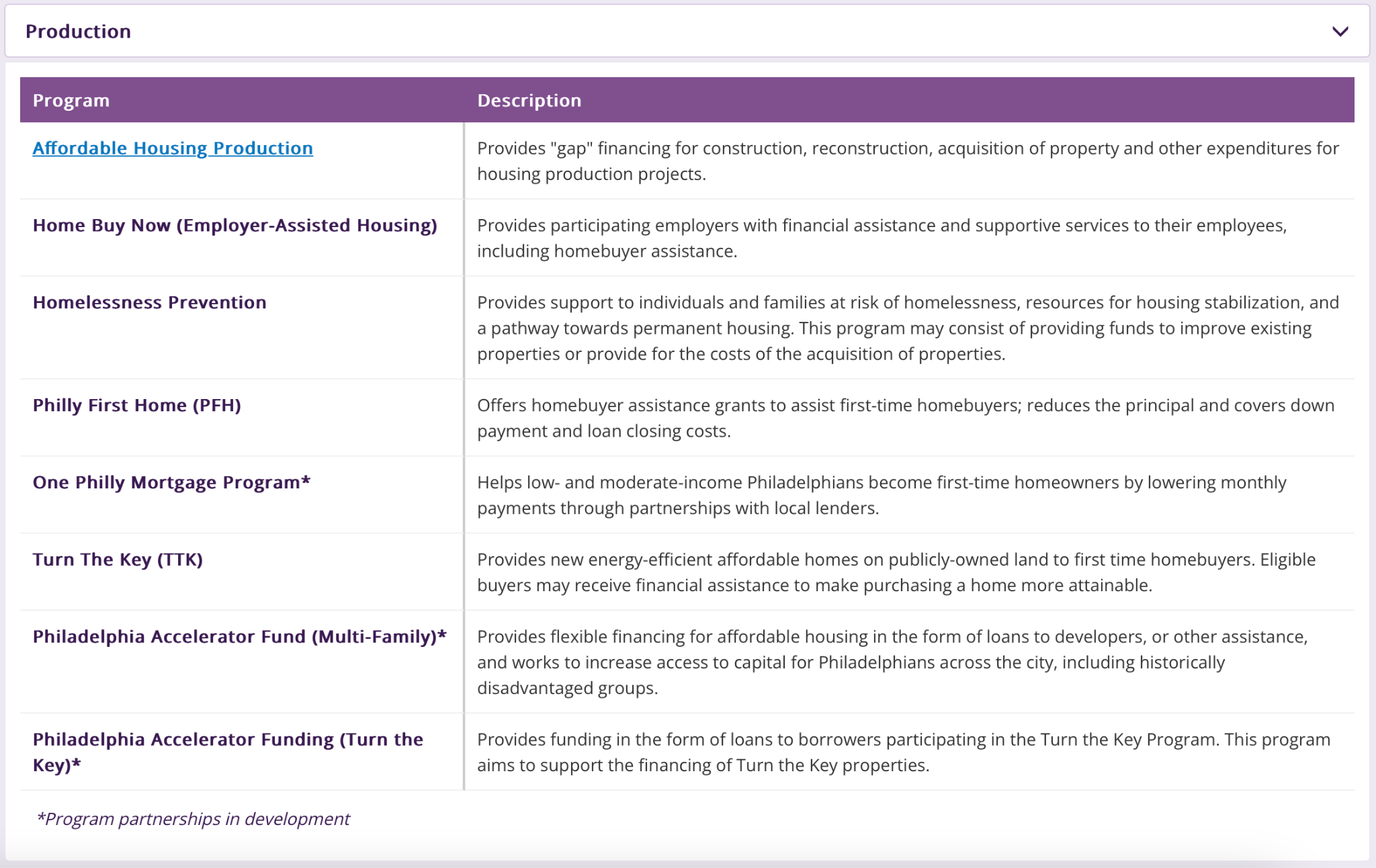
The list includes several programs that provide financial assistance to new homebuyers, such as Home Buy Now and Philly First Home. With the exception of Turn the Key, supported homebuyers are purchasing existing homes, not new construction. “Production” also includes the broad category of “Homelessness Prevention,” which “may consist of providing funds to improve existing properties or provide for the costs of the acquisition of properties” (emphasis added). It’s not that these aren’t worthwhile programs, but they simply don’t fit a common-sense definition of “production”...the creation of new housing units that did not previously exist.
Two programs hew more closely to that common-sense definition are Turn the Key (“Provides new energy-efficient affordable homes on publicly-owned land to first time homebuyers”) and “Affordable Housing Production.” Don’t think that these programs are fulfilling our social housing dreams, though.
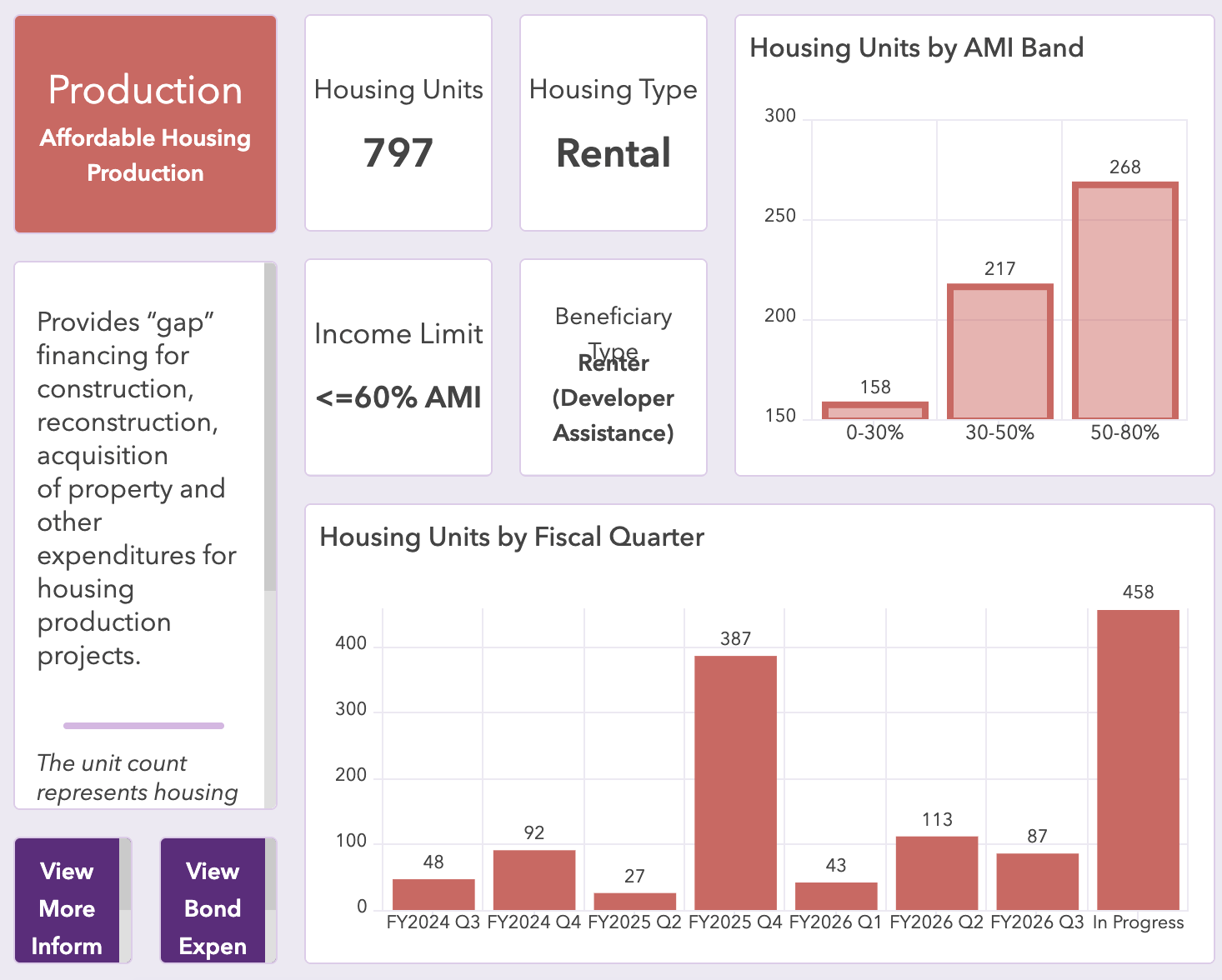
The Dashboard’s definition of Affordable Housing Production is “[p]rovid[ing] “gap” financing for construction, reconstruction, acquisition of property and other expenditures for housing production projects.” The units are designed to be affordable for households earning between 50 and 80 percent Area Median Income, so between $61,350 and $98,150 for a family of 4.
When you look more closely at the 4,670 units produced (in the Dashboard, looking at the data for Production and then filter by Program), you learn that…797 units have been built under “Affordable Housing Production.” But the 797 units haven’t all been completed yet — 458 units, more than half, are “in progress”—and the bulk that have been produced were completed prior to the start of Year 1 of the H.O.M.E. funding.
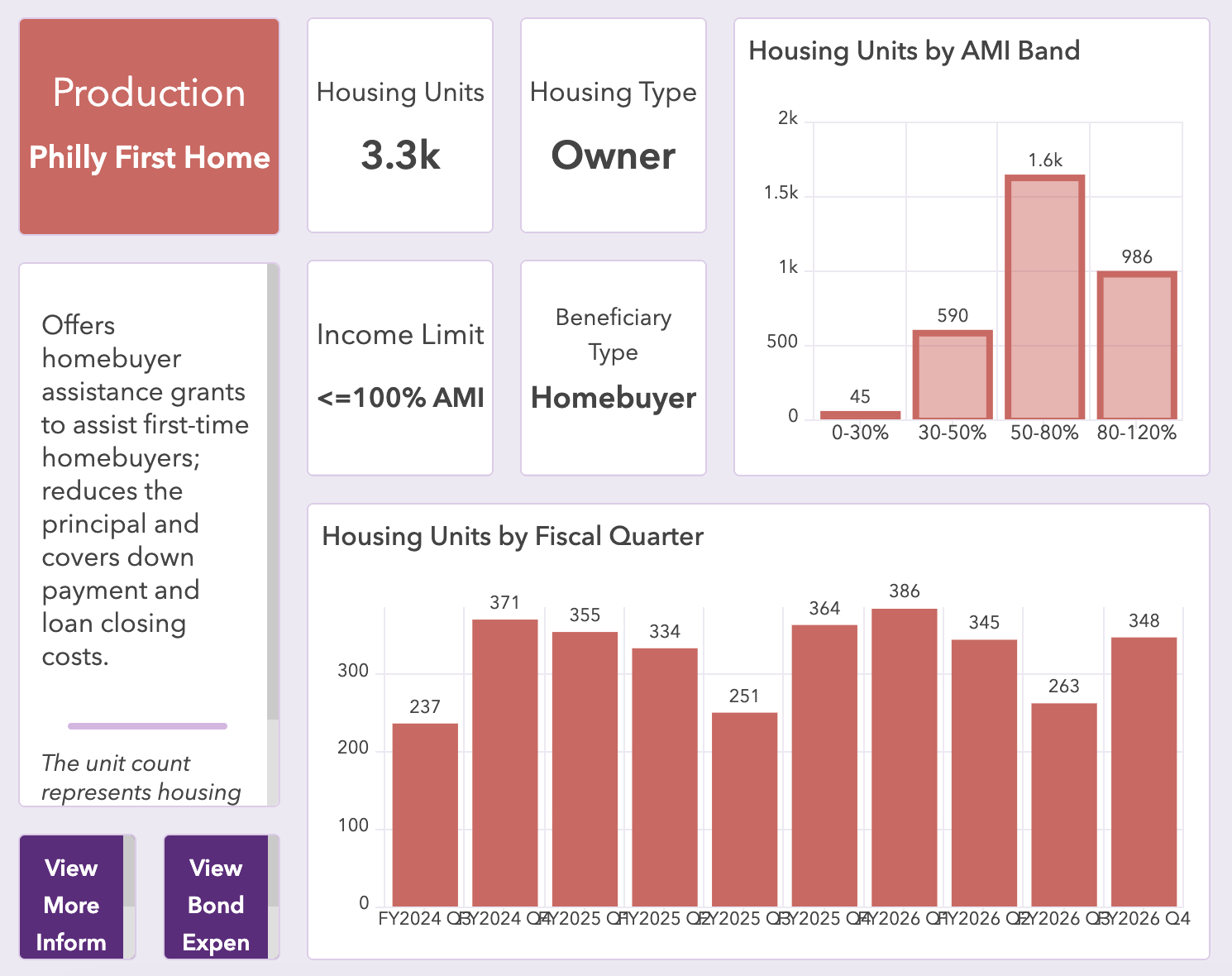
Most notably, 3,300 (the overwhelming majority of the 4,670 units produced) units were “produced” under Philly First Home, which again, “Offers homebuyer assistance grants to assist first-time homebuyers; reduces the principal and covers down payment and loan closing costs.” Again, that is cool! Not opposed! There is just no world in which it makes sense for the Administration to claim that down payment assistance has “produced” 3.3k new units of affordable housing. This also seems to bear no relationship to the release of the H.O.M.E. funds.
How many of the 16,394 units that the administration is celebrating can be attributed to the H.O.M.E. plan?
Based on the dashboard itself, only $16.6 million of H.O.M.E. funds have been spent— 6% of the $277.2 million dollar first year budget. We are halfway through Year 1 (which began April 2026), but less than one tenth of the way through the budget.
The WHYY article cites a different number, though: “To date, the administration has spent around a third of the initiative’s first-year budget.” Where is this discrepancy coming from? Could it have something to do with the reimbursement model?
Angela Brooks, Philadelphia’s chief housing and urban development officer, admits that there is still work to be done. She notes, “Stuff is moving, but sometimes we’re reimbursing versus paying on the front end.” There are no follow-up questions in the article about what she means by this. What does “sometimes” mean? Why is H.O.M.E. reimbursement-based? What are the ramifications of program administrators like PHDC and other agencies fronting the costs and waiting for reimbursement? Is bond money reimbursing normal program costs, and if so, why?
There are serious consequences to the slow drip of funding when nearly half of Philadelphians are rent-burdened, over 5,000 people are experiencing homelessness, and Philadelphia is imminently at risk of losing more affordable housing, like Neighborhood Restorations’ 925 affordable units. Housing insecurity is life-threatening. We don’t have time to waste.
Our ultimate question is this: Why is the media taking Parker Administration officials’ talking points at their face value, rather than probing deeper into the data?
Campaign Spotlight – Rental Ripoffs 💰
The Citywide Tenant Union of Philly DSA launched the Rental Ripoffs Campaign on October 1, 2026. The Campaign has six demands: ban late fees, junk fees, RUBS (Ratio Utility Billing Systems), AI Property Management, one-sided attorney fees, and penalize elevator outages.
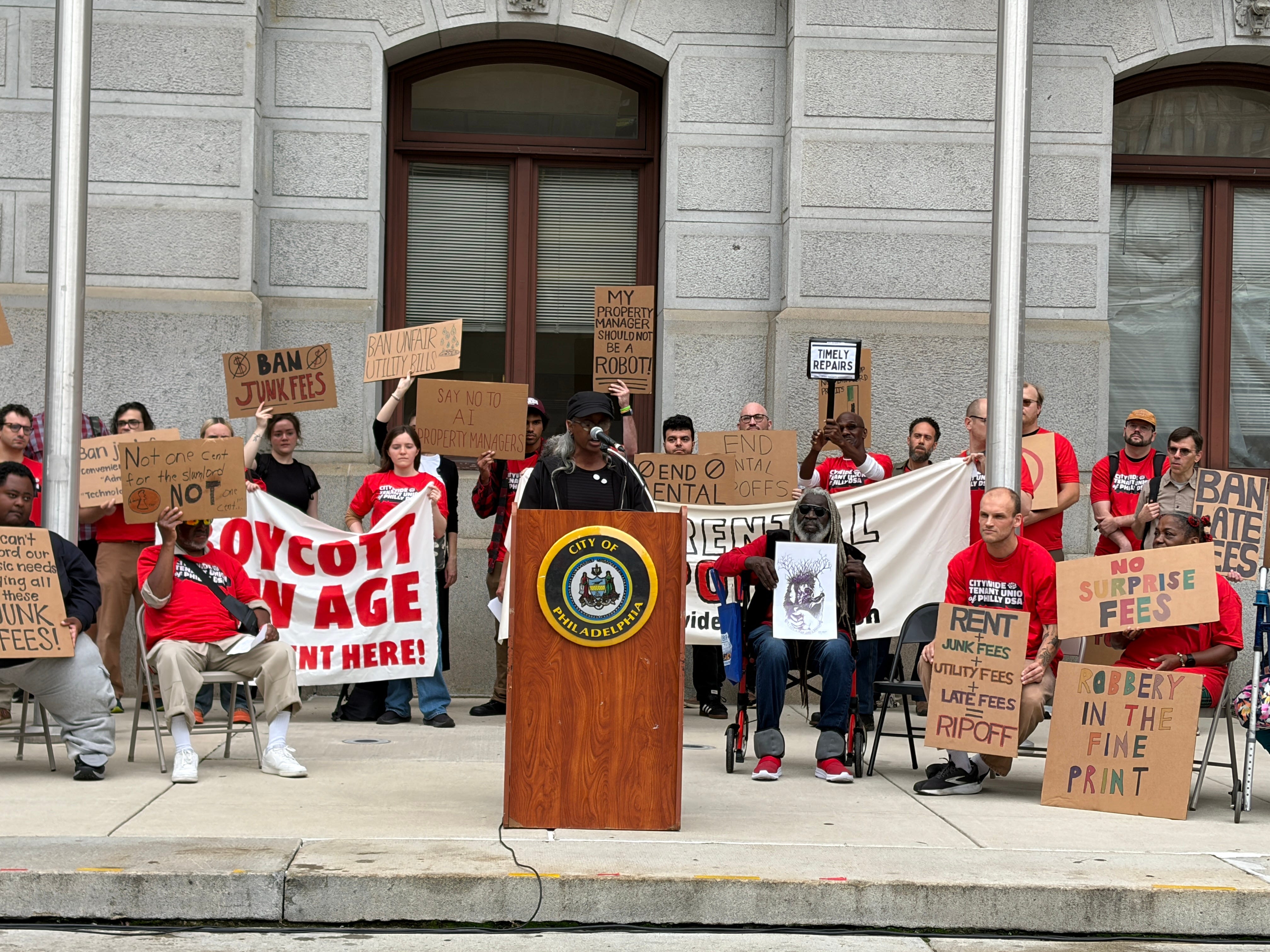
The Citywide Tenant Union (CTU) of Philly DSA organizes tenants to wield collective power. In 2026, CTU went public with three tenant unions. CTU members are organizing for better conditions in their own buildings and taking their fight citywide.
Want to get involved? They meet the first Monday of every month at Workers United at 22 S. 22nd Street from 6-8 pm. Want to organize your building? Email [email protected].
Upcoming events 🗓️
-
10/1-10/31: The Architecture of Us exhibit on Philly Rowhomes @ The Village of Industry and Art
-
10/9: DesignPhiladelphia: The Next Now Design Symposium: Innovation in Housing @ 320 S Broad St.
-
10/11: Citywide Tenant Union Jazz Benefit with Late Night Clubhouse @ Nikki Lopez
-
10/15: Renters United Philadelphia Monthly Meeting @ Virtual
-
10/17: Philadelphia Tenant Union Eviction Defense Training @ Wooden Shoe
-
10/24: DSA Housing Justice Commission Training @ Virtual
-
11/2: Citywide Tenant Union of Philly DSA Monthly Meeting @ Workers United
Happening Elsewhere 🌍
Tens of thousands of tenants in Spain are still protesting exorbitant housing costs and the violence of eviction after the forcible eviction of 87-year-old María del Carmen Abascal sparked outrage in Madrid. Their powerful uprising has led to proposals from the Spanish Parliament to limit the role of “vulture capital” (aka venture capital!) in housing, halt evictions for vulnerable residents until 2030, and to freeze the rent. Rest in peace, Maricarmen.
“I would like to be there with you, to be camping with you, fighting with you, but I don’t have that chance. That is why, from here, I’m asking you all to be brave. Fight to defend what is yours.” - Maricarmen Abascal
Thanks for making it this far. Write to us at [email protected] if there’s something you’d like to see included in our next newsletter, to comment, or to pitch a piece.